Search Term Record
Metadata
Search Term |
Cooksville Brickyard |
Details |
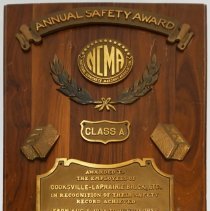
Thousands of years ago, glacial deposits of dense clay and sandy till mixed with the underlying shale to create an area near the modern intersection of Dundas Street and Mavis Road that would provide an economic boom in the early 20th century. The Ontario National Brick Company recognized the profitable potential of the site in 1912, purchasing a 200-acre farm at the northeast corner of Dundas Street and Mavis Road. In December of 1912 the company began to build and excavate on the site, developing the property for brick manufacturing. Over the years shale and clay were extracted from the land by a number of different company names, including the Cooksville Shale Brick Company, Cooksville Brick and Tile Company, The Cooksville Company Limited, Ontario National Brick Works, Cooksville La Prairie Brick Company, DOMTAR, and Canada Brick. Operations ceased in the early 1990s, and the site was later developed for residential and commercial purposes. In July of 1913 the brickyard, which employed some 140 workers, turned out its first shipment of brick. At its height the brickyard could produce 300,000 bricks every 10 hours. By the early 1920s the company employed 350 workers - almost half of the working population of Cooksville. By April of 1922 the company was producing 120,000 bricks per day in nine or ten different varieties, and touted itself as the "Largest Brick Plant of its Kind in the World." By the 1930s, the brickyard was one of historic Mississauga's major industries. By the 1940s the brickyard was the largest supplier of brick in Canada. Bricks were produced using a method known as the "stiff mud" system. After the clay was extracted from the earth, it would be ground into a fine powder, mixed with water, and then molded into blocks. The blocks were then dried before being taken by rail to the large kilns for baking. Bricks were transported by horse until the mechanical "Tip 40" carts were introduced. The brickyard had its own internal railway system with more than two miles of track, three locomotives, and twenty-six rail cars. The quarry comprised 26 acres of dense shale deposits, tested to a depth of 300 feet. As demand for their products grew, the company expanded operations, eventually working through the winter months. The Cooksville Brickyard employed and housed many new immigrants. While a large portion of the work force was of Italian origins, there were also those of Croatian, Irish, Polish and Ukrainian ancestry. Employees worked six days per week, and an average of 13 hours per day. Brickyard employees earned from 25 to 45 cents per hour. In the summer of 1913, the brickyard company began building 15 dwellings for employees. The brickyard village consisted of a small street layout and four rows of brick houses and boarding houses. By 1924 there were 35 families living at the brickyard, and many more single male workers living in the large boarding house. The employees and their families became very involved in the local community. At its height through the 1950s the brickyard sponsored a football club, softball and soccer teams, and an orchestra. During the Second World War, the brickyard also housed German prisoners of war from the merchant marine. The village was gradually closed in the 1950s. |